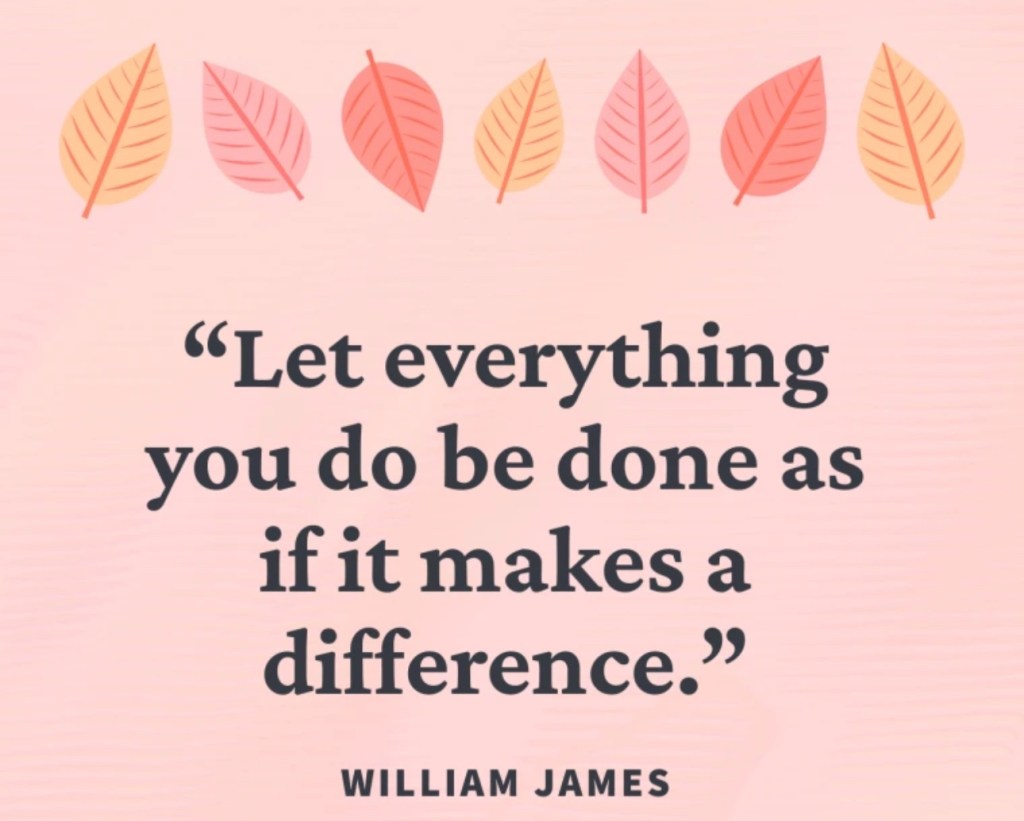
as Ecclesiastes 9:10 says, “Whatsoever thy hand findeth to do, do it with thy might; for there is no work, nor device, nor knowledge, nor wisdom, in the grave, whither thou goest.”
The smell of a classroom is universal, yet deeply personal. It is a heady mix of dry-erase markers, old paper, floor wax, and the electric, often chaotic energy of young minds in flux.
For most of my life, this was a scent I tried to outrun because I technically lived in the midst of it. It was the scent of my father’s button-down shirts after a long day at the chalkboard; it was the atmosphere of my childhood dinner table, where the “business of the school” was the only language spoken and literally my mother’s business as she worked as a hairdresser on a school campus – a training college- one that trained teachers!
I grew up in the shadow of a pedagogical dynasty. My father was a titan of the classroom, dedicating 35 years to the profession with a resilience that I found both admirable and exhausting to witness. He was a master of English and Literature, teaching and guiding his students with so much passion and enthusiasm. Silas Marner, his students nicknamed him and i, they called Eppie (comes from the novel, Silas Marner: The Weaver of Raveloe , the third novel by English author George Elliot). He wasn’t alone. My paternal grandfather had paved the way, and four out of my father’s seven siblings followed suit. In my family, teaching wasn’t just a career; it was a genetic predisposition, a default setting.
Yet, I was the outlier. I watched them carry home heavy stacks of marking and the even heavier emotional burdens of their students. I read some of the essays my father’s students may have written and I laughed as I could correct most of their errors. I can still hear Dadagold’s voice: “don’t read their essays. It will mess up your English.” And we’d burst out laughing.
I told myself, with the stubborn conviction of youth, that I would be the one to break the cycle. I wanted a life outside the school gates—something “mine.” I certainly didn’t think my future involved explaining the nuances of the passé composé or the irregular stems of the subjonctif.
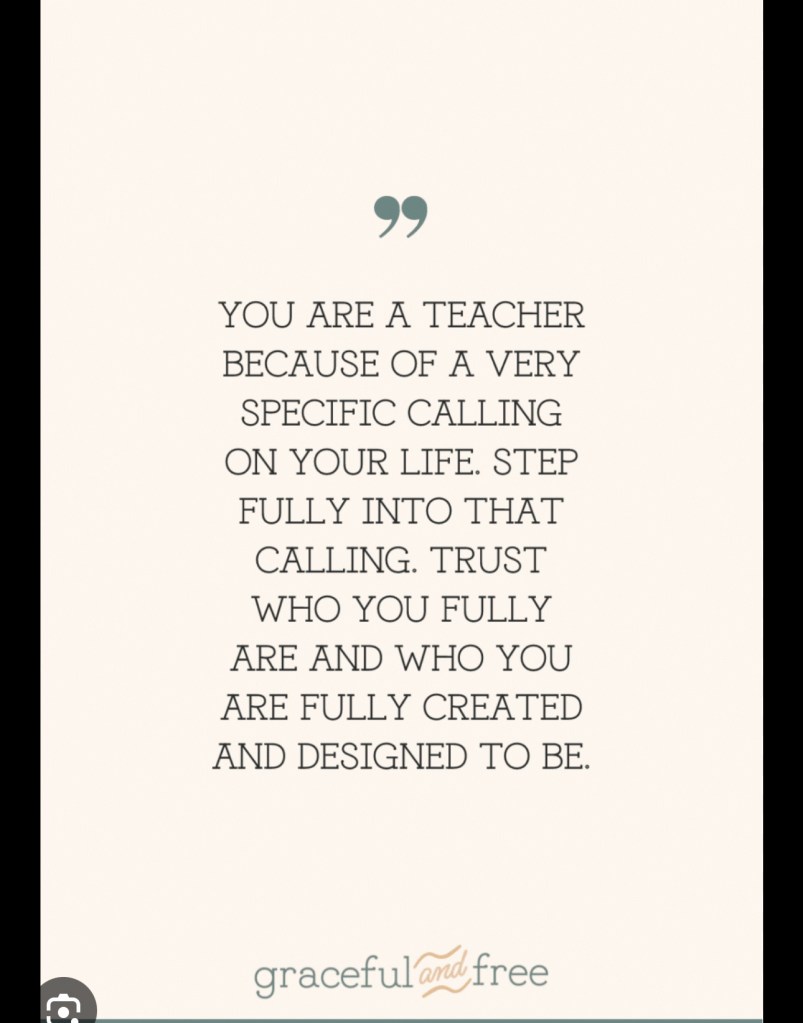
Little did I know….
The Rural Awakening
Life, however, has a penchant for irony. After completing my bachelor’s degree in French (which was, by the way, my father’s option for me), and thinking oh I could easily find a job with an embassy or with an international firm that would appreciate a bilingual, and filled with the idealism of a fresh graduate, I met the cold reality of the job market. The doors I knocked on remained closed, save for one. The only hand extended to me was held by the very profession I had spent years avoiding!
I found myself posted to a rural part of Ghana, about an hour outside Kumasi. It was a world away from the structured, academic environment I had envisioned. The educational system there was struggling, hampered by a lack of resources and infrastructure that felt, at times, insurmountable.
In those early days, I wasn’t a “teacher” by passion; I was a teacher by necessity. I stood before children who arrived at school , some with empty stomachs but wide eyes, others with an attitude as stinking as the smelliest of gutters, and here I was, trying to introduce the beauty of the French language to students whose primary concerns were far more immediate than foreign vocabulary. I navigated a system where textbooks were a luxury and the heat of the afternoon sun seemed to wilt the very air in the classroom. Yet, it was in the dust of that rural outpost that the first cracks appeared in my resistance. I realized that for these children, learning French wasn’t just another subject; it was a window to a global community, a bridge to a world beyond their village. Some of them wanted to see what could be beyond those walls. They sometimes asked me to talk to them about the outside world. About my travels. One of the books they had to read as part of their secondary education was titled “le tour du monde en 80 jours”…to wit, “a tour of the world in 80 days” and it was a pleasure trying my very best to make this book not just an educational requirement for them, but to bring to life the experiences narrated in the story – instilling the hope that one day…maybe one day, they could also be on such a journey or better.
The Crucible of Precision
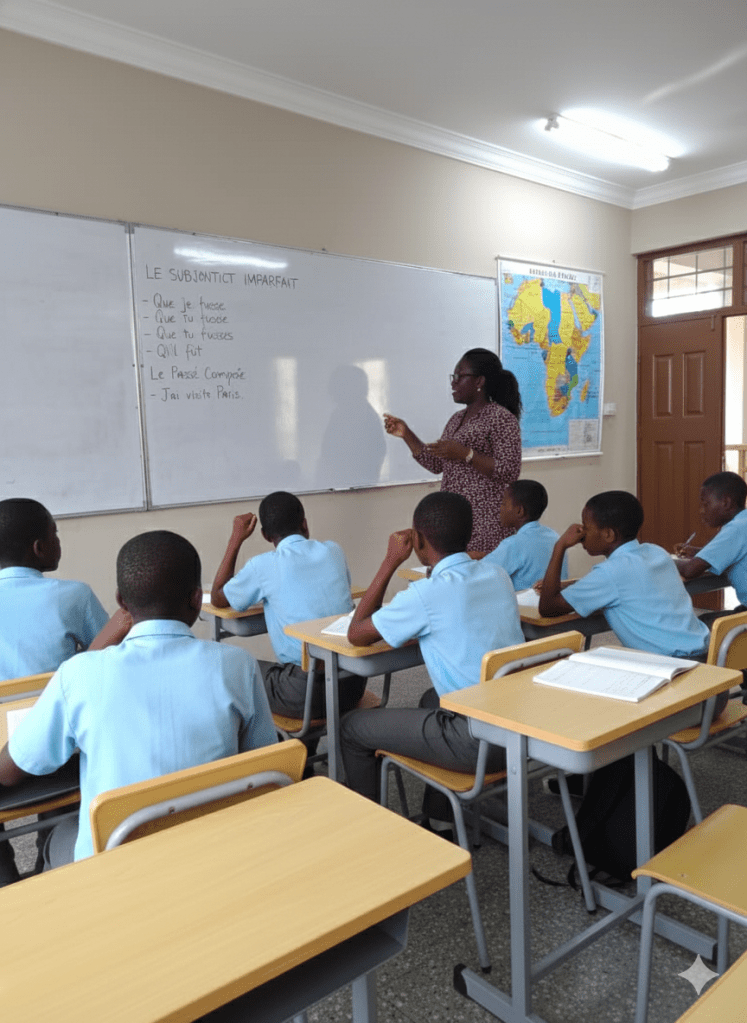
Fast forward seven years, and the landscape of my career has shifted dramatically. I transitioned from the resource-strapped schools of the countryside to a secondary school on a totally different continent, defined by stringent systems and absolute precision.
In my current school, the margin for error is non-existent. The administrative oversight is rigorous, the curriculum is demanding, and the expectations from parents and the board are towering. It is an environment where you cannot afford to make a mistake. Every lesson plan is scrutinized, every grade is audited, and every interaction is measured against a standard of excellence. Here, teaching French is not just about conversation; it is about the rigorous architecture of grammar and the precise phonetics of a language that demands respect.
The irony is not lost on me: I fled the “family business” only to end up in its most intense iteration!

The Shift from Instruction to Impact
Somewhere between the rural chalkboards of Ghana and the high-pressure corridors of my current school, something profound changed or let me say, seems to be changing. I have stopped seeing teaching as a detour and started seeing it as a vocation of the heart. Not too sure, only sometimes… but worth noting…
Working with a spectrum of ages—from the wide-eyed curiosity of young children to the turbulent, searching energy of teenagers—has reshaped my soul. I have learned that secondary school teaching is not merely about “imparting knowledge” or ensuring students can correctly use the conditional : “Je voudrais du pain, de la brioche, et de l’eau.”
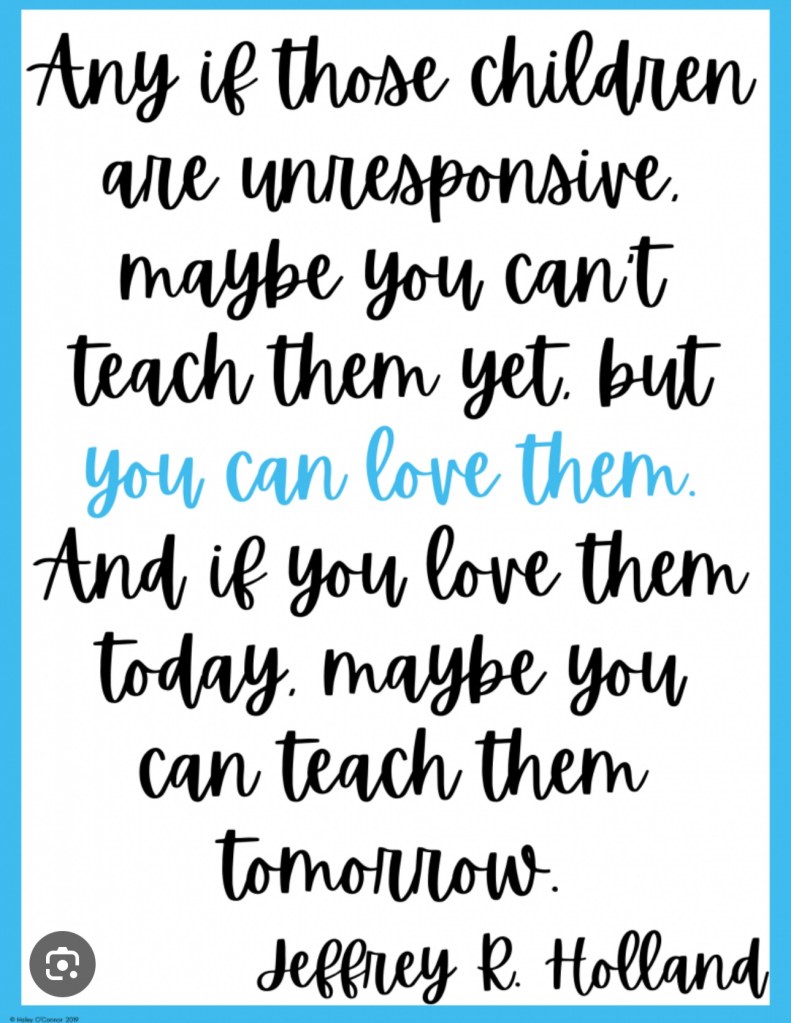
Rather, it is about the holistic education of a human being. It is about noticing the quiet student in the back row who has stopped making eye contact. It is about navigating the fragile egos of teenagers who are trying on different identities like sets of clothes and make up. It is about the “training” of character, the instilling of discipline, and the nurturing of empathy. I am no longer just teaching them how to speak another language; I am teaching them how to listen to the world.
I am surprisingly, finding a strange, fierce, deep joy in this. I am becoming the teacher who stays extremely late, not always because the “stringent system” demands it, but because a student needs to talk about their fears for the future. Or I need to make a phone call to a student’s parents to discuss progress or to make sure I have planned very amazing interactive lessons for the following day so that my students know that one hour spent in my classroom was worth it. I have become the mentor who agonizes over a child’s moral development as much as their French oral exam results.
The Paradox of Passion
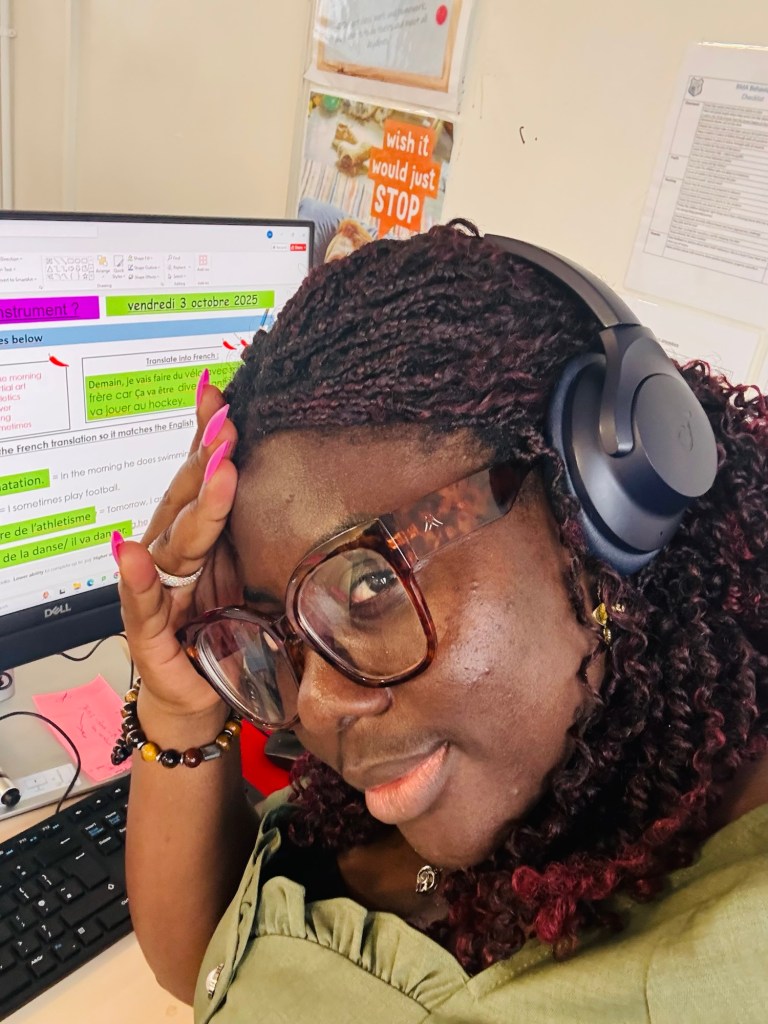
There is a specific honesty I must maintain: I still do not want to be a teacher forever. The ghost of my younger self, the one who wanted to forge a different path, still whispers. I know that this chapter of my life has a horizon. And yet, this realization does not diminish my new found passion; it seems to be intensifying it. Because I know my time in the classroom is a finite resource, I give it everything I have.
I am passionate about what I am doing now because I see the stakes. I see that even within a rigid, “no-mistakes” system, there is room for profound human connection. I see that the challenges—the burnout, the administrative weight, the emotional toll—are the price of admission for the privilege of shaping a generation. I am passionate because, despite my initial reluctance, I have discovered that I am good at this. I am a guardian of their potential.
Legacy and Light
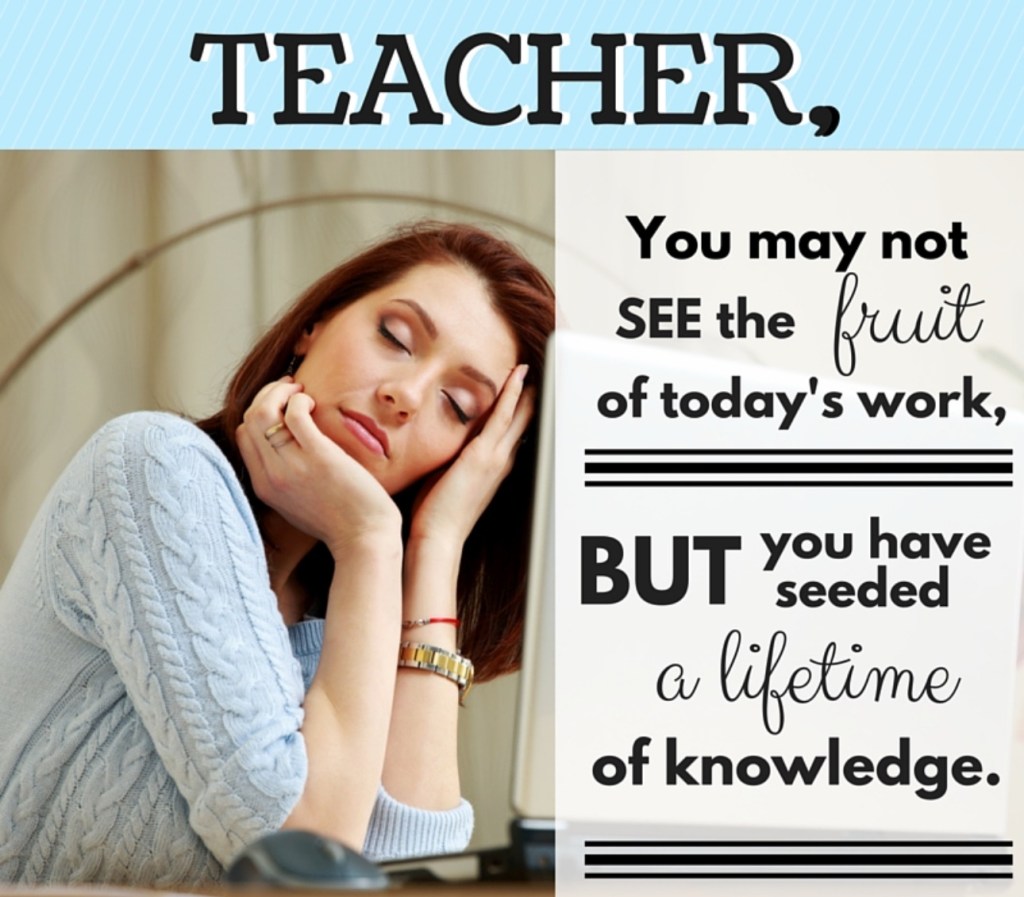
I think of my father now more than ever. I think of his 35 years and the thousands of lives he touched. I understand now why he did it. I understand that teaching is a form of immortality; you live on in the way your students think, the way they treat others, and the way they face challenges.
I may have been an “accidental” teacher, a reluctant heir to a family legacy, but I am no longer an indifferent one. Whether I am in the classroom for five more years or twenty, I am committed to the “now.” I am committed to the teenager struggling with their identity and the child discovering the music of a new language for the first time.
The chalk dust that I once tried to brush off my sleeves has become a part of me. Maybe now it’s a marker stain. It represents the friction of growth, the beauty of a lesson well-learned, and the undeniable truth that sometimes, the path you run away from is the one that leads you exactly where you need to be.
So as I always tell my students- “C’est la vie!” And “La vie est toujours belle!” and it is a life I am proud to be living, for as long as it lasts.
With love this Sunday afternoon as we inch closer to Christmas…
~ Rosario.


 The Rosario Woman
Leave a reply to Ranv Cancel reply